
What products are involved?
Rheonics sensors and the Rheonics sensor electronics (SME), including Ex sensor configurations.
What is the purpose of this article?
This article gives the ratings to use when selecting a power supply for the Rheonics sensors and shows some examples of power supplies that can be used with the sensor.
Table of Contents
- 1. Sensor Power Consumption
- 2. Power Supply Specification
- 3. Power Supplies for Ex Sensor Configurations
- 4. Glossary
- 5. Installation
- 6. Examples and Clarifications
- 7. Industrial Power Supply
- 8. Laboratory Power Supply
- 9. References
1. Sensor Power Consumption
Rheonics sensors run on 24V DC, with 18-36V DC acceptable. Each SME draws at most 200 mA and 5W, so select a galvanically separated power supply rated for at least 400 mA and 10W per sensor [1], [2]. The sensor does not measure when it is powered over USB.
- Voltage required: 24V DC
- Voltage range acceptable: 18-36V DC
- Current consumption (maximum): 200 mA [1], [2]
- Recommended current capacity: at least 400 mA [1], [2]
- Power required (maximum): 5W [1], [2]
- Recommended DC supply power rating: at least 10W [1], [2]
- Fuse (if required) rating: >500 mA Slow-blow fuse
For multiple sensors, multiply by the number of sensors to be powered to properly specify the power supply.
Rheonics sensors can be configured over USB but the sensor will NOT make any measurements over USB supplied power. For operation (factory floor or in lab), it is recommended to power the sensor using a galvanically separated, certified power supply from a reliable source. Check power supply to ensure you get the required voltage and current without significant noise.
2. Power Supply Specification
When selecting a power supply to power the Rheonics sensors, select one with the following ratings:
- Voltage output: 24V DC
- Power rating: 10W or higher [1], [2]
- Current rating: 400 mA or higher [1], [2]
Power supplies are often available that meet the local regulatory approvals and can take all of the following inputs: DC, AC, Single-phase, 2-phase, 3-Phase.
3. Power Supplies for Ex Sensor Configurations
Power supplies for EX sensors should comply with the following characteristics:
- Voltage output: 24V DC
- Power rating: 10W or higher [1], [2]
- Current rating: 400 mA or higher [1], [2]
- Power supply input: 240V AC maximum, single phase. This applies only to Ex sensor configurations and helps protect the Zener barriers used in them.
The SME is powered only by 24V DC. Never connect AC voltage to the SME [1], [2].
For installing the SME and the Zener barriers in a cabinet, see Enclosure for Sensor electronics and Zener barriers.
4. Glossary
- DC: Direct Current
- V: Volt
- W: Watts
- SME: Rheonics sensor electronics
- GND: Ground
5. Installation
- Connect a 24V DC supply to the power input terminals on the sensor electronics (SME).
- Power input terminals on sensor electronics (SME) are labeled with 24 V DC + and – GND.
It is important to avoid ground loops in the setup / plant where the SME is used. Ground loops can lead to excessive currents on the ground / return wire of the SME 24V power supply which can damage the unit.

To prevent this, we strongly recommend that the SME is powered by a separate 24V power supply with galvanic separation. Otherwise, the SME might be permanently damaged.
A 24V DC output of a PLC or IPC can be used only if it is galvanically isolated: do not share the supply ground with other instruments unless galvanic isolation is confirmed [1], [2].
To wire the sensor cable to the SME, see Connecting Sensor Cables and Wires to Rheonics SME Electronics. To size a circuit breaker for the SME, see Sizing circuit breakers for Rheonics SME.
6. Examples and Clarifications
We show below some examples of industrial power supplies that can be used with the sensor. This is by no means an endorsement of any specific brand. Any adequately rated power supply from reputable manufacturers will give you stable, noise free and safe power supply for your sensor operation.
It is the customer's responsibility to ensure that the power supply that is sourced meets the local and national requirements for their installation.
We do not sell power supply due to the varying global connector and power ratings. However, the power supplies mentioned below are quite universally available or have suitable similar alternatives.
The SME has a maximum power input requirement of under 5 W.
7. Industrial Power Supply
- Used in enclosures/cabinets
- Used for powering sensor in the plant (Industrial power supplies provide a higher level of reliability in connection compared to power adapter connected to power strip)
- Single, 2- or 3-phase power supply can be used which has a DC output of 24V DC
These typically tend to be DIN rail mount units as shown below:

Figure 1. DIN rail mounted power supplies (SIEMENS)
Figure above shows various types of DIN rail mounted power supply from a supplier (SIEMENS). These are typically mounted on DIN rails as shown below:

Figure 2. Power supplies mounted on a DIN rail
Other types used inside equipment are Switching Power Supply (SPS):

Figure 3. Switching Power Supply (SPS)
8. Laboratory Power Supply
- Used for benchtop tests
- Used in Labs
These typically tend to be power adapters connected directly to the wall outlet or benchtop power supplies.
8.1 Power Adapters (Wall Mount Style)
These can be directly mounted on the wall outlet. They will need an adapter to connect from the plug on the adapter to the SME. Alternatively the jack can be removed and the wire ends can be directly used (recommended to use a crimped connection on the ends).
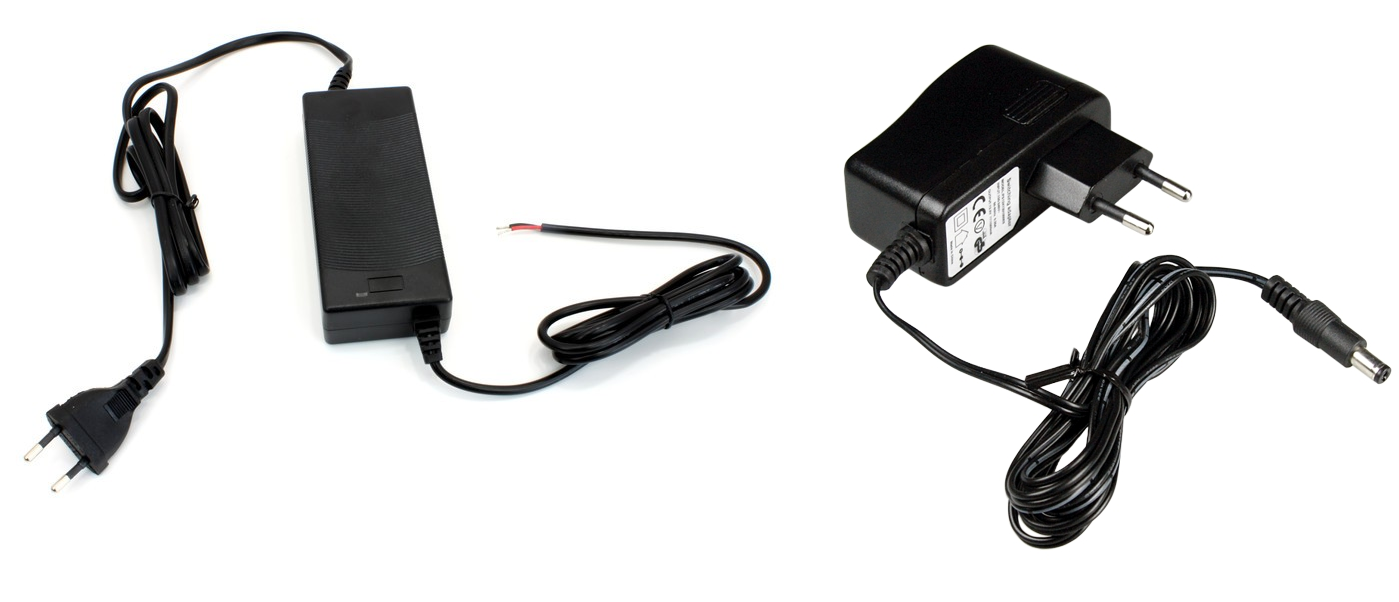
Figure 4. 24V DC power adapters with European plug
The photo above shows 24V DC power adapters with European plug. Similar types are available with US, Australian, UK, Japanese, and other plugs.
When searching your local supplier for these adapters, the English keywords are "24V DC power adapter".
8.2 Benchtop Power Supply
These are versatile and often have selection of power outputs. It is important that the power output is set to 24V DC. A voltage below the 18-36V DC acceptable range may not be sufficient for the sensor to operate, and a voltage above it can damage the SME electronics.

Figure 5. Benchtop power supply (Rohde & Schwarz)
Photo above shows a typical benchtop power supply from a supplier (Rohde & Schwarz), there are a lot of other suppliers of these benchtop power supply. Often these are programmable with ability to select the voltage and current.
Below we provide a few links to order pages for power supplies as an example, these are only used here as examples and the customer should select one that is easily available and they trust.
- Wall adapter with global plug options: Mean Well GE12I24-P1J (Digi-Key)
- DIN rail mount power supply: Siemens LOGO!POWER 6EP3331-6SB00-0AY0
24 V / 1.3 A Stabilized power supply input: 100-240 V AC output: DC 24 V / 1.3 A - Benchtop power supply: Keysight E3640 Series bench power supply
9. References
- Rheonics GmbH, Rheonics SRV Inline Viscometer Manual, DocID SRV-G1-OP-2606, Jun. 2026.
- Rheonics GmbH, Rheonics SRD Inline Density and Viscosity Meter Manual, DocID SRD-G1-OP-2606, Jun. 2026.