
What products are involved?
Rheonics SRV viscometer, SRD density-viscosity meter with SME-TRD and WirelessHART.
What is the purpose of this article?
This article defines a wireless monitoring framework using SRD sensors and WirelessHART to automate density tracking in remote lithium ponds. It details the technical data path from Modbus TCP to MQTT for real-time cloud integration.
Table of Contents
- 1. Overview
- 2. Real-Time Pond Monitoring: Rheonics SRD
- 3. Adaptive Mesh Networking with WirelessHART
- 4. Data Integration: From the Pond to the Cloud
- 5. References
1. Overview
Lithium brine extraction requires precise, continuous density monitoring across vast areas where traditional power and cabling are often non-existent. Traditional manual sampling is infrequent and labor-intensive, making it difficult to respond to process changes. This article describes a wireless density monitoring solution that uses Rheonics SRD sensors to provide the real-time data needed for effective process control.
2. Real-Time Pond Monitoring: Rheonics SRD
This solution is built on the integration of Rheonics SRD sensors and WirelessHART technology. The Rheonics SRD is an inline density and viscosity meter installed directly into the brine. When paired with the Rheonics SME-TRD, as shown in Figure 1, the system transmits viscosity, density and temperature data wirelessly. These variables provide valuable information for the operation:
- Density: Tracks lithium salt concentration. This is the primary variable for monitoring the Brine Evaporation process.
- Viscosity: Indicates brine mobility and composition changes.
- Temperature: Since density is temperature-dependent, this variable is used to distinguish thermal variations from concentration changes and to calculate temperature-compensated density.
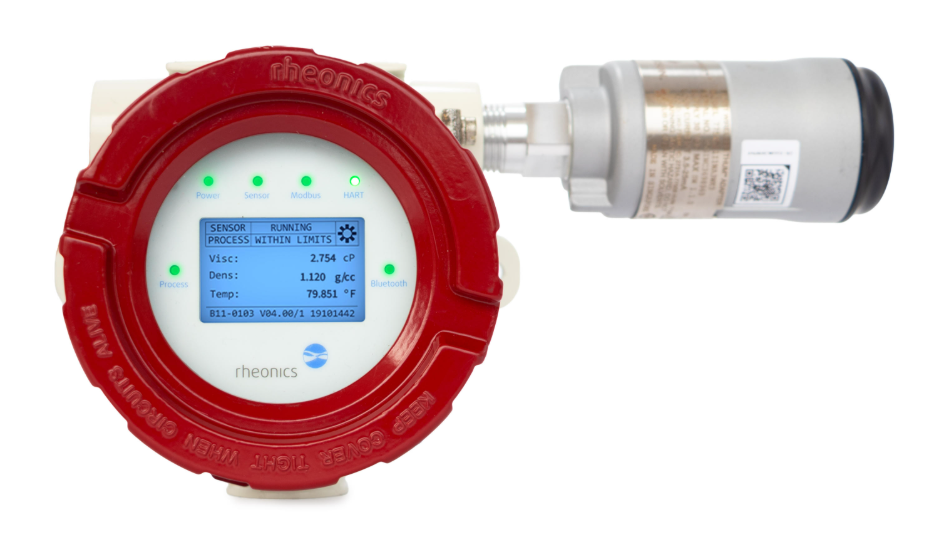
Figure 1. Rheonics SME-TRD with WirelessHART
Rheonics SME (transmitters) are available in multiple configurations to support various applications. Detailed specifications for each variant can be found here: Discover Rheonics Electronics and Communication options
Wireless sensors allow you to monitor remote locations without expensive and complex wiring. These units can be mounted on skids anywhere along the pond perimeter (Figure 2). Solar power is an option for independent operation, allowing continuous monitoring even kilometers away from the plant.
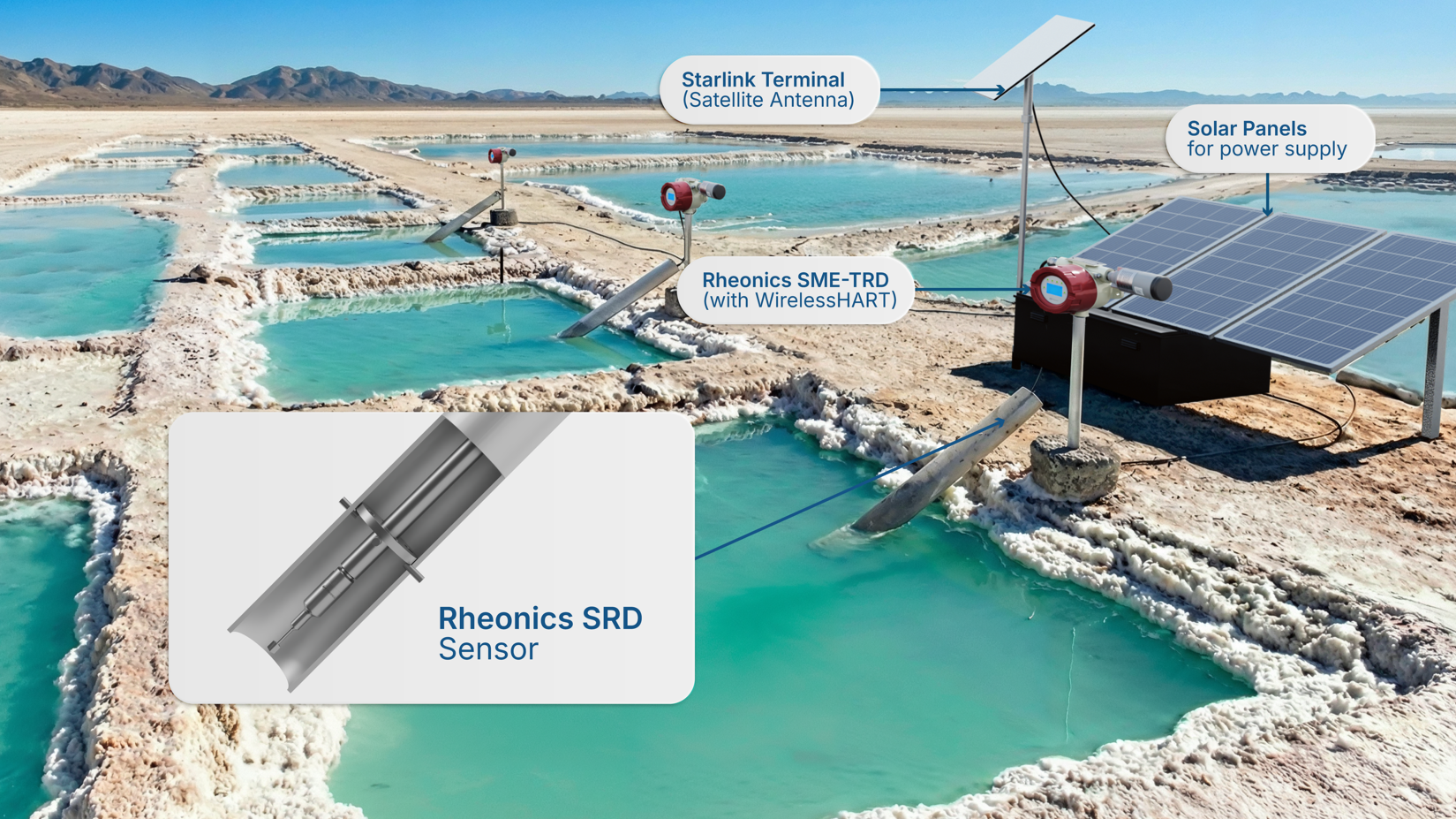
Figure 2. Rheonics SRD in Lithium Pond
For detailed installation procedures (SRD-TT teletube variant), see the full application note: Density and Concentration Brine Pond monitoring in lithium extraction process
3. Adaptive Mesh Networking with WirelessHART
The solution uses WirelessHART technology and a self-healing mesh network (Figure 3) to ensure data reliability. In this architecture, every device acts as both a sensor and a repeater. This creates redundant communication paths so that data reaches the gateway even if an obstacle blocks a signal.
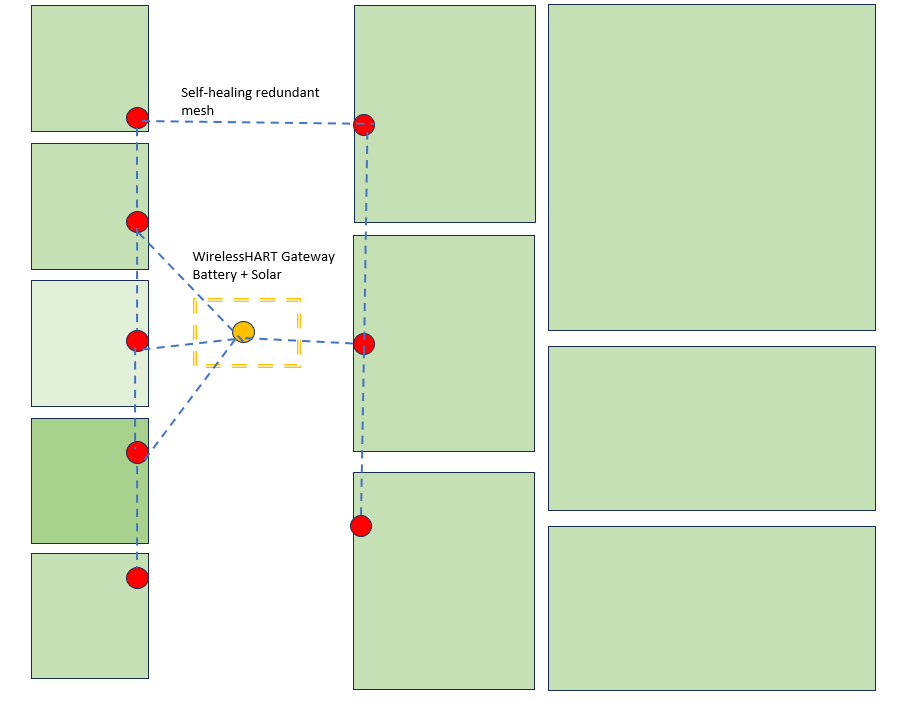
Figure 3. Lithium Brine Overview: WirelessHART approach
WirelessHART allows the network to scale easily as pond operations expand.
4. Data Integration: From the Pond to the Cloud
The transition from raw sensor data to actionable cloud analytics involves a standardized industrial communication stack. Figure 4 illustrates how the architecture integrates WirelessHART data to provide visibility across the operation.
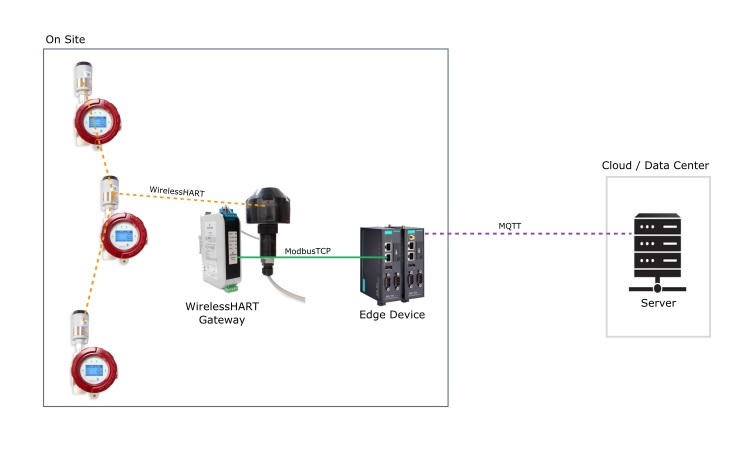
Figure 4. Integration with the Cloud
- WirelessHART Gateway: Collects real-time data from the mesh network and converts it into standard industrial protocols like Modbus TCP.
- Industrial Edge Device: Manages data at the site by bringing processing logic closer to the sensors. It cleans and transforms data from Modbus TCP to MQTT for reliable transmission.
- MQTT Protocol: Transmits data to the cloud via 4G or satellite links like Starlink. MQTT is a standard for reliable data transfer in remote or high-latency environments.
5. References
- Rheonics, "SRD Inline Density Meter." [Online]. Available: rheonics SRD » Density Meter inline online specific gravity concentration. [Accessed: Feb. 2, 2026].
- Rheonics, "Electronics and Communication." [Online]. Available: Electronics and Communication » rheonics :: viscometer and density meter. [Accessed: Feb. 2, 2026].
- Rheonics, "Getting started with WirelessHART communication." [Online]. Available: WirelessHART Setup Guide for Rheonics Inline Viscometers. [Accessed: Feb. 2, 2026].
- Rheonics, "Density and concentration: Brine pond monitoring in lithium extraction process." [Online]. Available: Density and Concentration Brine pond monitoring in lithium extraction process » rheonics :: viscometer and density meter. [Accessed: Feb. 2, 2026].