
What products are involved?
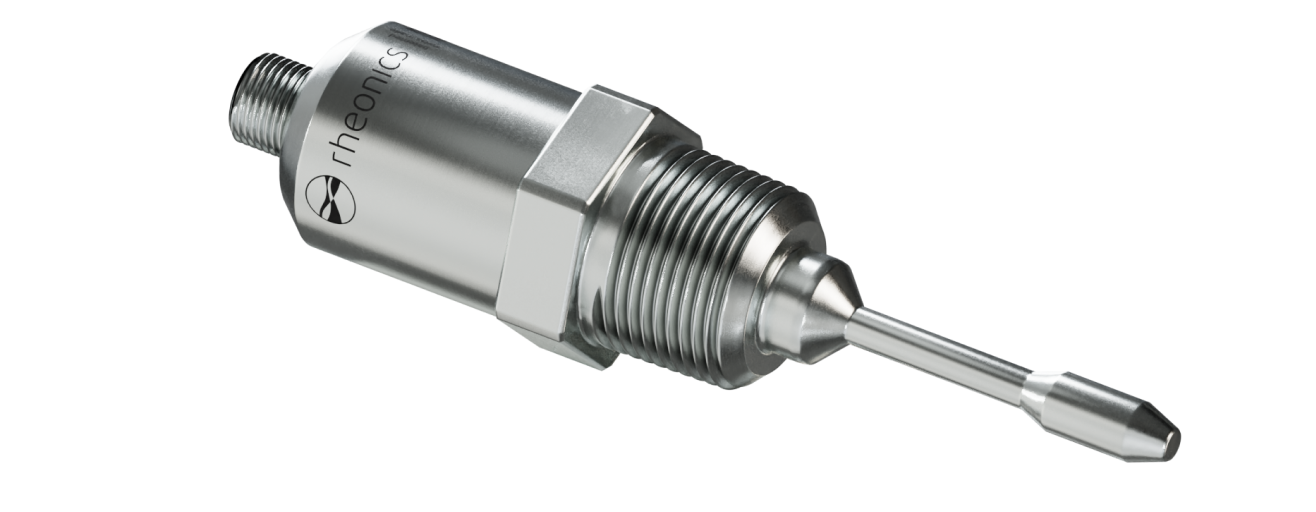
SRV - Inline Viscosity Meter
What is the purpose of this article?
To give an overview of the SRV NPT 3/4” variant, installation guidelines, instructions, special considerations and available accessories.
TABLE OF CONTENTS
- 1. Introduction
- 2. General installation guidelines
- 3. Additional considerations for the installation point
1. Introduction
SRV is Rheonics sensor for inline viscosity measurement (viscometer). Read more on SRV here.
The NPT 3/4”-14 connection is Rheonics most commonly used design for SRV. In most cases, it is the most price-efficient option with the shortest lead time and the largest selection of accessories.
NPT threaded connections are very common in industrial applications. It is used both in low and high-pressure environments, up to 500 bar / 7500 psi. This type of connection allows for an easy process integration using some of Rheonics accessories or a thread in a pipe or vessel.
This threaded connection requires the use of a Teflon band. This helps to ensure a sealed connection and avoids cold welds (the process connection adaptor may get stuck with the sensor, leading to severe damage).
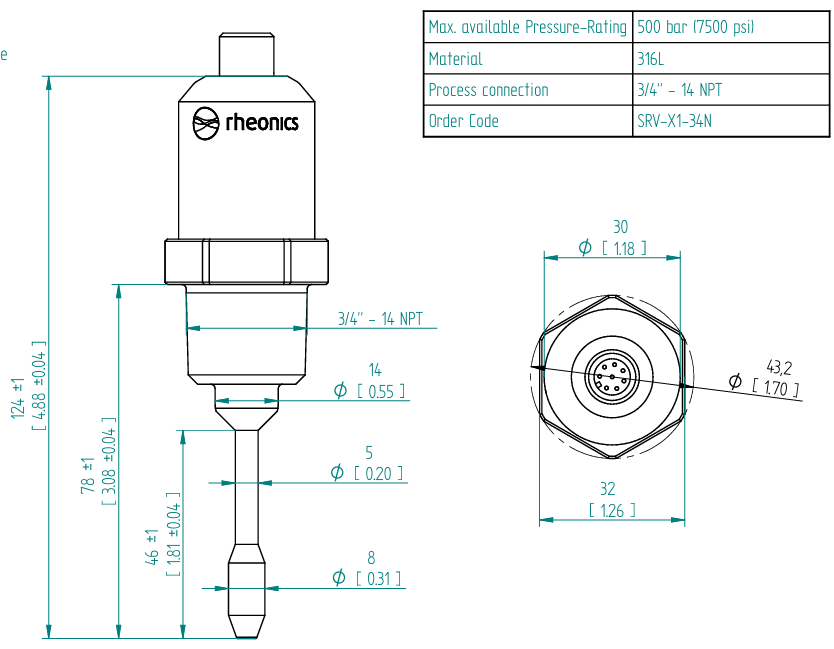
Figure 1: SRV NPT dimensions.
Specifications | |
Sensor | |
Order code | SRV-X1-34N |
Connection type | NPT |
Thread size | 3/4" |
Threads per inch (TPI) | 14 |
Wrench for installation | 32mm (1-1/4”) |
Drawing and CAD file | |
2. General installation guidelines
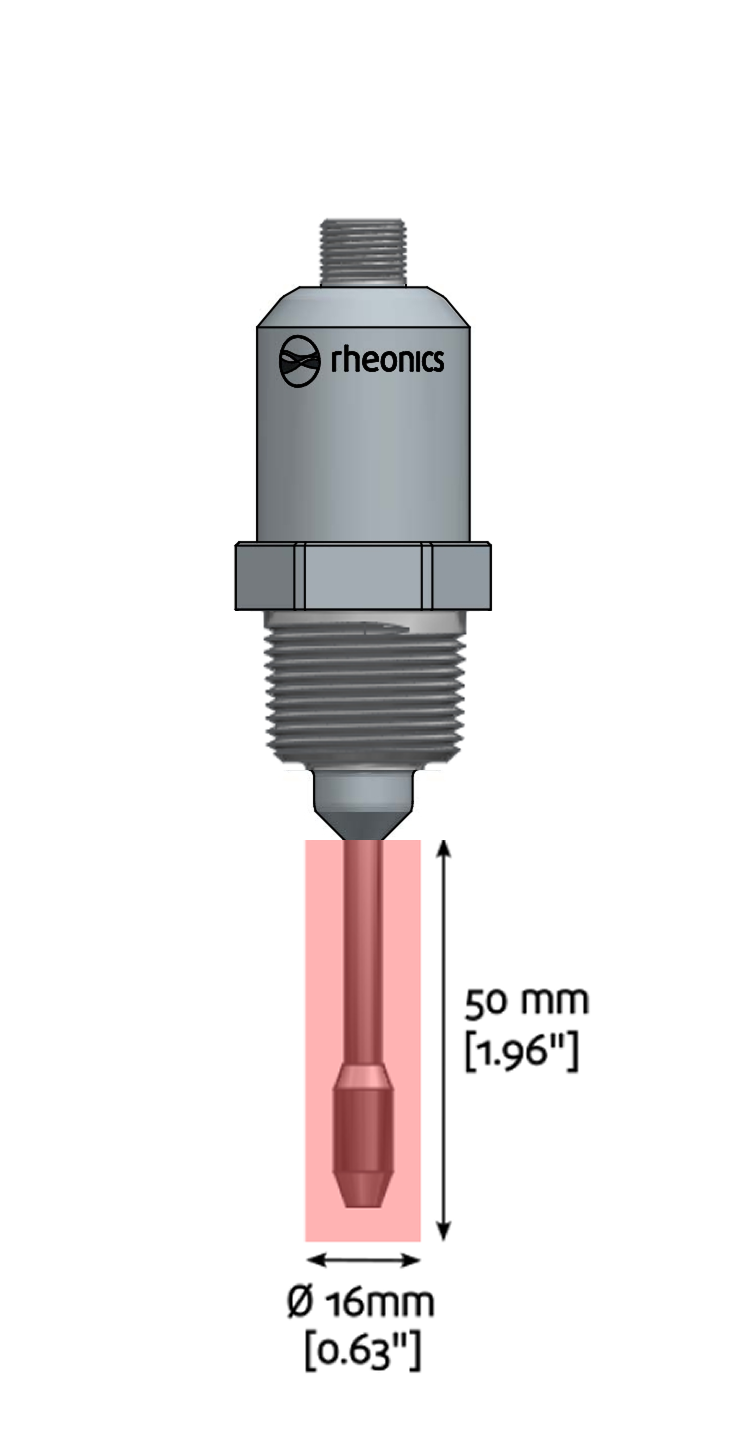
Before talking about the mechanical installation considerations of the SRV-3/4 NPT, it is important to mention some key points to consider. The SRV has the same resonator across all its variants, with installation requirements related to the sensing area of the probes (shadowed red area, Figure 2), which are:
- This area should be free of deposits or obstructions
- This area should be completely filled with the fluid of interest
To achieve the installation requirement, the following considerations must be taken into acccount:
2.1 Submersion (Proper insertion length)
As mentioned, the sensing area of the sensor should always be fully submerged in the fluid since SRV measures what is in contact with its sensing element. This can be a problem when in a process, the flow rate is low, and the pipe isn’t usually completely filled, or when the sensor is installed too far out of the center of the pipe (usually for long standpipes on tees), where fluid gets stagnant and is not flowing properly, almost static. Notice also that a clearance of at least 5 mm is required between the sensor tip and a pipe wall or any other obstruction; this is usually considered for small diameter pipelines.
Generally, to ensure proper immersion in perpendicular orientation with the fluid, the SRV-X1-34N is installed with the WOL-34NS or WOL-34NL. For parallel (elbow installations), the flow cell IFC-34N-SRV is recommended.
2.2 Stagnation and dead zones
For accurate measurements, stagnations and dead zones must be avoided. These are defined as any space inside the sensing area (red zone), where the fluid is stagnant or not flowing. Stagnations inside the sensing area can cause measurement issues for non-Newtonian fluids, promote the formation of deposits, and have a slow response time due to the lack of fluid exchange. Avoiding stagnation in the sensing area is crucial for a stable, reliable, and fast measurement, especially for complex fluids.
SRV can also quantify deposits around it and alarm the user when the probe requires cleaning using a Cleaning Status parameter
3. Additional considerations for the installation point
3.1 Flow rate
For Newtonian fluids, the flow rate that induces shear rate does not affect the viscosity in static or any moving states of the fluid. However, for non-Newtonian fluids (the most common fluids used in industry), viscosity is shear-dependent and varies with the flow rate; therefore, viscosity readings will differ between static and different flowing conditions. For processes with non-constant flow rates, the recommendation is to install the SRV in a section of the pipeline with the most consistent flow rate to have a steady viscosity value.

Figure 3: Viscosity behaviour by induced shear rate
Flow rate is also relevant to ensure the full submersion of the SRV sensing element into the fluid. The sensor should be placed in a section where the pipe is usually full of fluid (i.e., after a pump). However, if the pipe has a constant low flow rate, the pipe may not be full of fluid at all points.
Installing the sensor upwards can solve the issue, as shown in Figure 4. Still, it should not be considered for fluids with solids or characteristics that can create deposits around the sensing element. An angled or side of the pipe installation could also help.
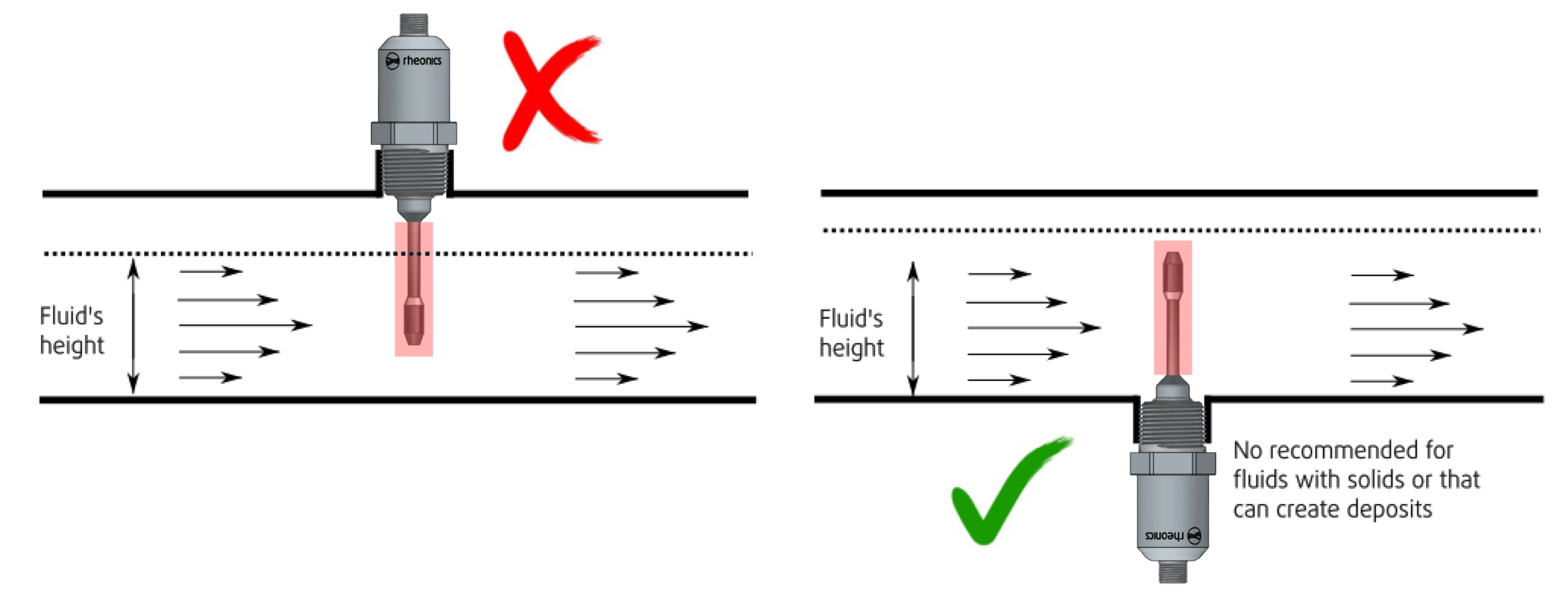
Figure 4: Pipe not fully filled with fluid
In all cases, the SRV’s sensing element should be submerged in the fluid. It’s best to avoid installations with long standpipes (i.e., using a long weldolet or tee), since that may lead to not good fluid transfer resulting in measurements that do not reflect the true state of fluid or worse, high noise measurements.
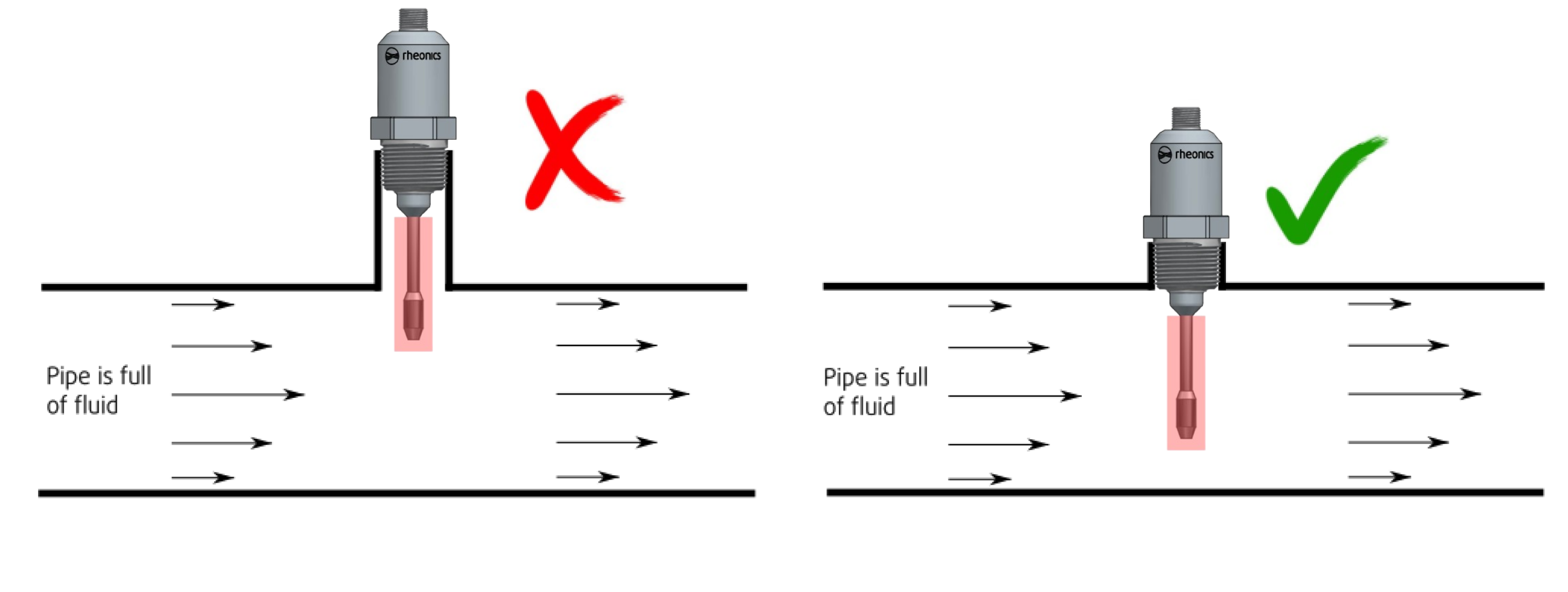
Figure 5: Flow conditions in installation.
3.2 Fluid type
The SRV, in general, works well with almost all fluids as long as the installation is correct. Some common fluid types and scenarios are mentioned next:
Static Newtonian fluids.
Moving Newtonian fluids regardless of flow rate changes (for non-Newtonian fluids, viscosity changes with flow rate, but SRV ensures reproducibility at constant flow rates).
Bubbly fluids under moving conditions. Static bubbly fluids will work, but the risk of bubble concentration deviating from the readings after some time should be considered.
SRV works for flow velocities up to 12 m/s, depending on the probe orientation. Read more here: Rheonics inline process density meter SRD and viscometer SRV for high flow rate and high viscosity applications
Important installation considerations are given in this article for these and other specific fluid types.
4. Installation common issues
As explained above, for accurate, repeatable, and reproducible readings of the SRV, it is important to maintain the considerations for proper installation of the sensing element. Below are some examples listed where these concepts are not achieved, leading to potential issues in the readings:
4.1 Potential issues- NPT Tee connection
Potential issue explanation: A common mistake with installations of the SRV-X1-34N is using any off-the-shelf NPT Tee (Figure 5). An installation with the SRV, vertical or horizontally, mounted in such a Tee port, can be prone to stagnant and dead zones.
 Figure 5: Standard NPT Tee [6]
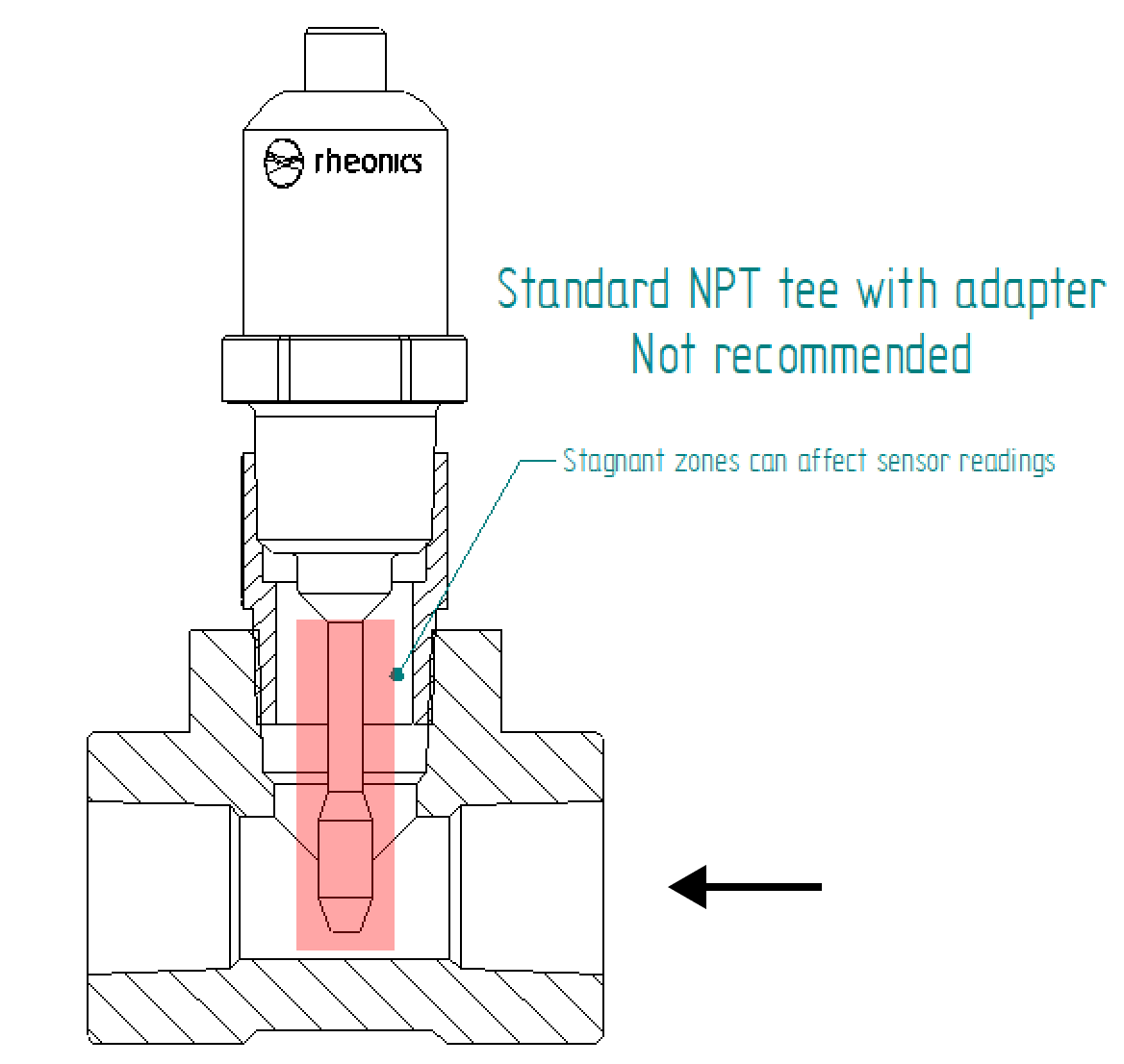
Figure 6: Installation in standard NPT Tee with potential issues
Recommendation: In these cases, the Rheonics IFC-34N-SRV is recommended to ensure the flow surrounds the sensing element properly, and stagnant zones are removed as in Figure 7.
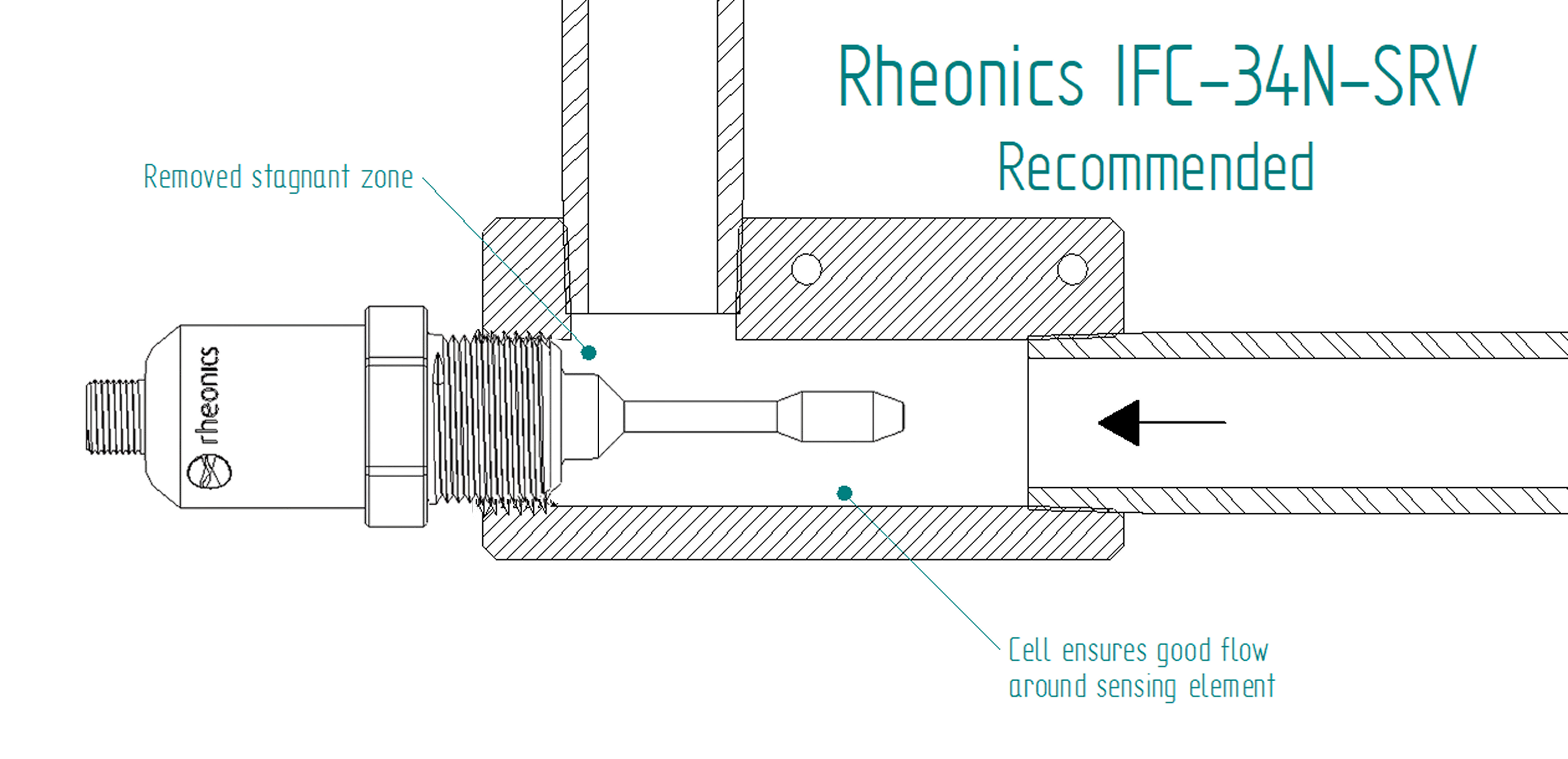
Figure 7: Correct installation in Rheonics NPT flow cell
4.2 Potential issues - NPT connection adapter
Potential issue explanation: At times, users may want to adapt the 3/4” NPT connection of the SRV-X1 to a different flange, like Tri-Clamp. They would use an adapter similar to the one shown in Figure 8. These adapters can lead to both incomplete immersion and stagnation zones prone to fouling or deposits at the base of the sensing element which will affect the measurements (see Figure 9). This scenario may not affect applications for low-viscosity fluids like ink but could be a significant problem for high-viscosity fluids like dough, adhesives, glue, and others.
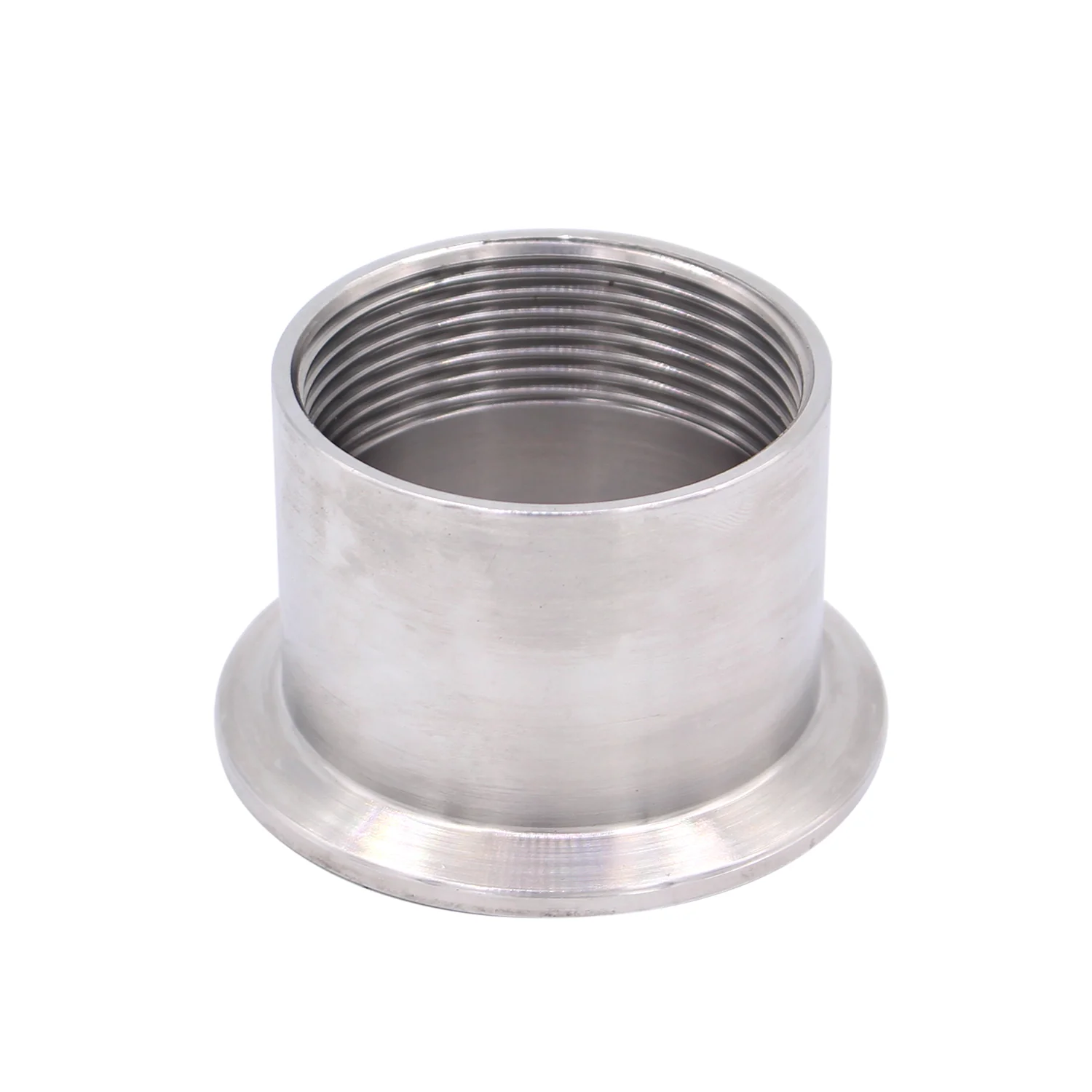
Figure 8: Standard NPT to Tri-Clamp adapter [7]
Recommendation: The client should order the SRV with the required process connection to directly mount it inline without the need for additional adapters (Figure 9, installation to the right). If Tri-Clamp is required visit the SRV-X3. If custom flanges are required visit the SRV-X2.
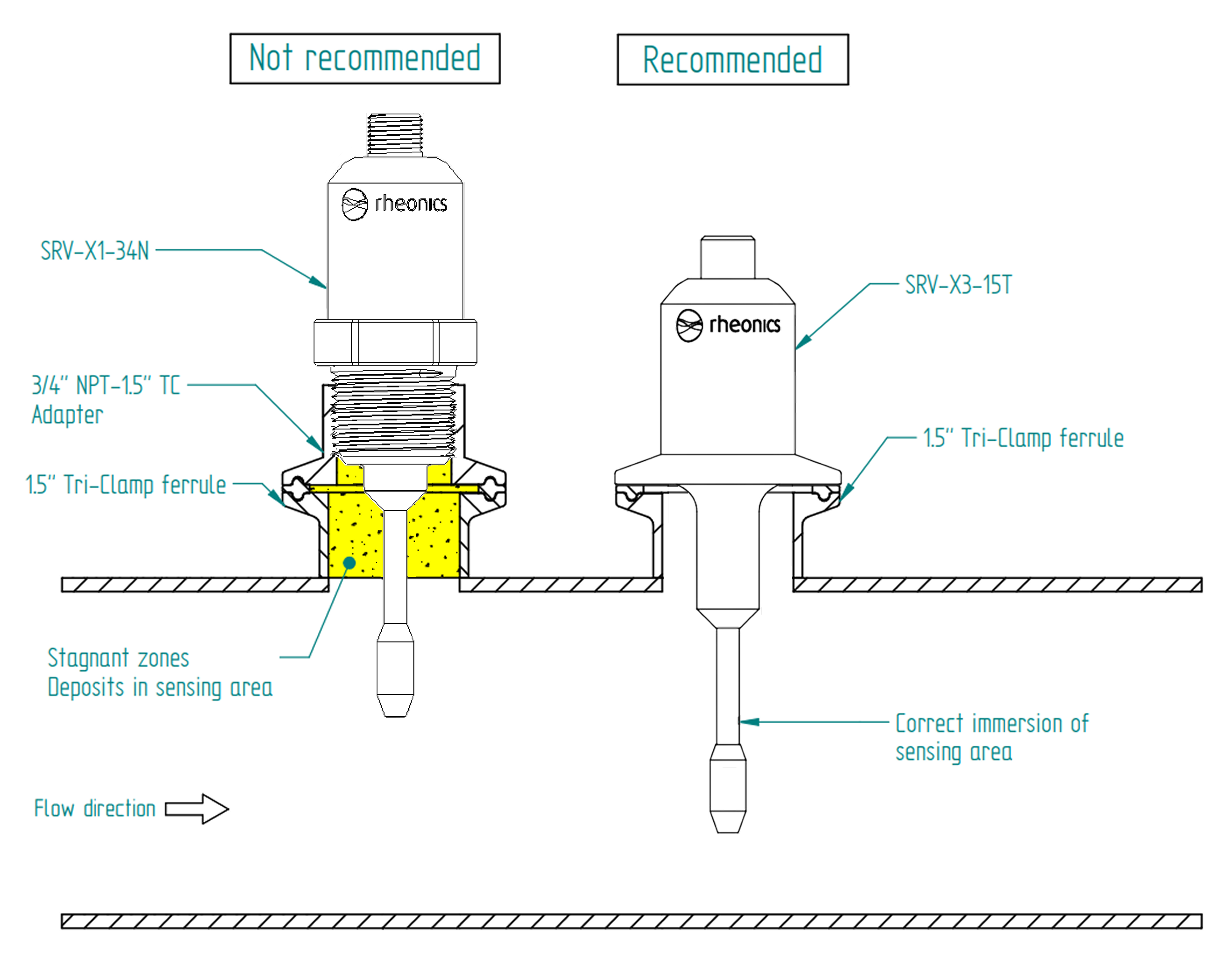
Figure 9: Installation recommendation with NPT adapters
4. Process connection installation instructions4.1 Connection steps
i. Wrap a sealing compound (e.g. Teflon tape) around the sensor NPT thread 1.5 to 3 times in a clockwise direction, to ensure a leak-free seal.
ii. Place the sensor in the female threaded accessory.
iii. Turn by hand the sensor NPT thread until hand tightened.
iv. Use a wrench (32mm size or 1-1/4") to give the sensor from 1 up to 3 more full turns.
In total, according to ASME Standards, at least 3.5 and at maximum 6 full turns need to be ensured for a correct NPT installation. The sensor shouldn't be completely tightened.
3.2 Specific Process Connection installation instructions
In line: Ensure the sensing element is exposed to fluid, and avoid stagnation and dead zones. Consider placing the sensor upwards or parallel to the fluid for small flow rates that can’t fully surround the sensing element.
In tank: Place the sensor at the bottom, wall or lid of the tank as long as the sensing element can be fully submerged in the fluid and dead zones are avoided. Usually, it is useful if the sensor is placed at a tank’s height that has always fluid. Rheonics TMA-34N accessory is a tank mount adapter used for NPT SR-sensors, that should be considered in tank installations. This is detailed sections below.
Others - Thread flange: SRV NPT sensor can be mounted on a flange thread of the same size (3/4"-14). The flange needs to have an inner diameter larger than 26mm on the process side, the material should be either 304 or 316L and the height can't exceed 25mm. If the flange has a bigger height, an FPC-type (long insertion) sensor is needed.
Once again, in these and any installation cases, stagnation zones around the sensing element should be avoided. For thread flanges, the height of the standpipe of the connection is relevant as shown in the next figures.
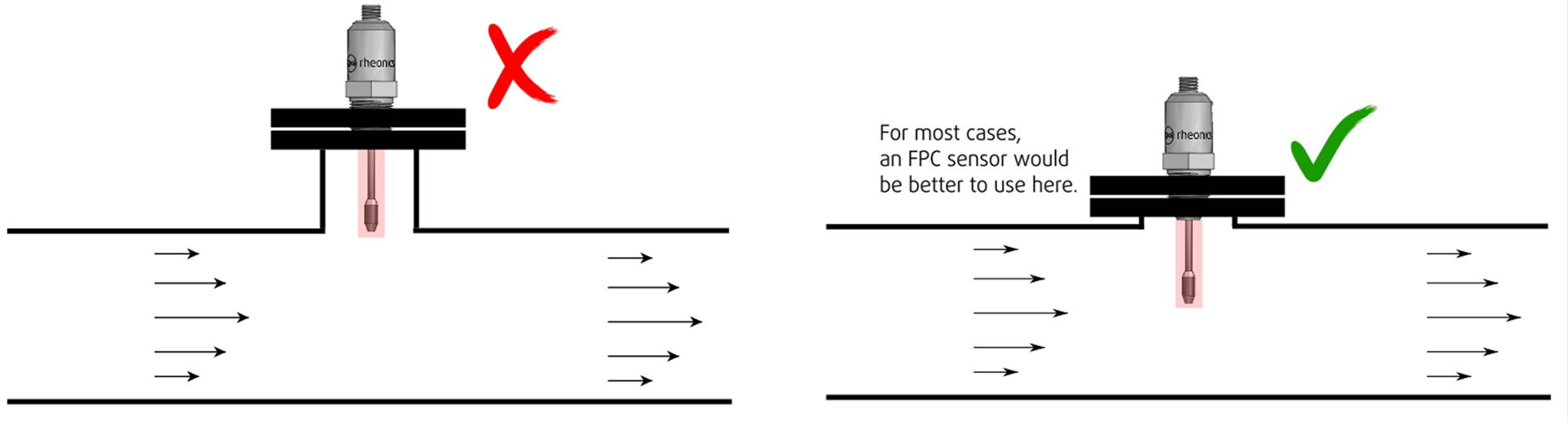
Figure 10: Threaded flange.
5. Accessories available5.1 Weldolets
a. WOL-34NS
Weldolet for 2” pipes that ensures maximum exposition of the sensing element to the fluid. Also suitable for SRD NPT 3/4” -14. Refer to the WOL-34NS page for more information.
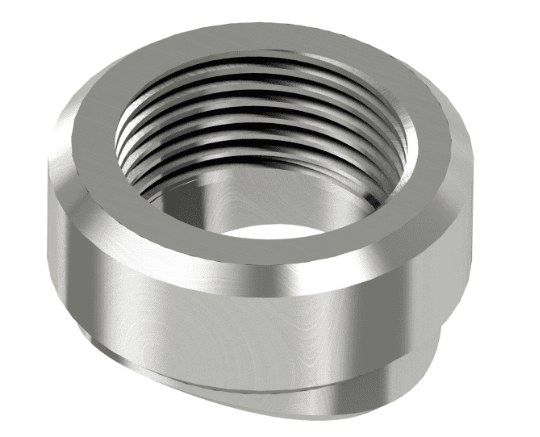
Figure 11: WOL-34NS.
b. WOL-34NL
Weldolet for 2.5” and larger pipes, also suitable for tank installations, that ensures maximum exposition of the sensing element to the fluid. Also suitable for SRD NPT 3/4” -14. Refer to the WOL-34NL page for more information.

Figure 12: WOL-34NL.
5.2 Flow cells
a. HPT-SRV
Suitable only for SRV NPT 3/4”-14 and recommended for lines with a small nominal diameter (around DN3 or 1/8”) and high pressures (up to 500 bar, 7500 PSI). Connecting threads for this accessory are 9/16-18 UNF.
Read more about this on its accessory page.
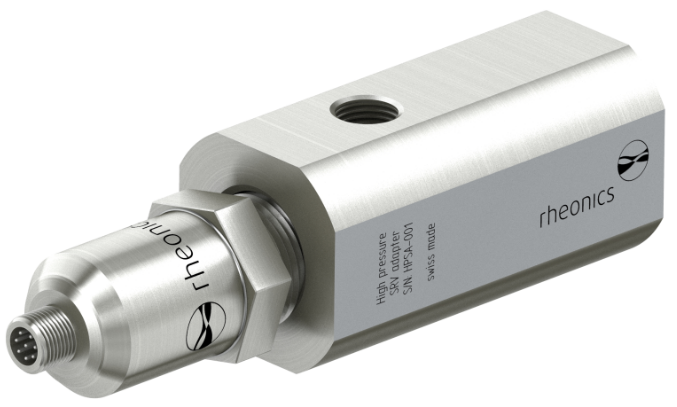 Figure 13: Flow cell HPT-SRV.
b. IFC-34N-SRV
Suitable only for SRV NPT 3/4”-14 and recommended for inline installation with nominal diameters of DN5 to DN25. Connecting threads for this accessory are NPT 3/4” -14.
For a diameter larger than DN25 (1”), we recommend using a bypass. Then, the flow cell can be connected via flexible hoses or fixed piping. Installing the sensor in a bypass is a common solution for process lines that require intense cleaning through means of pigging.
Read more about this on its accessory page

Figure 14: IFC-34N-SRV.
5.3 Tank mount adapter - TMA-34N
Suitable for SRV and SRD only in its NPT 3/4"-14 variant, this accessory is recommended for open vessels or tanks with a lid. It is composed of a small cell, wherein the sensor is installed, and a 3/4" pipe fixed at the top and with a variable length so the sensor can go as far as needed.
Read more about this on its accessory page or its support article here.

Figure 15: TMA-34N.
References[1]: https://rheonics.com/products/inline-viscometer-srv/
[2]: https://rheonics.com/product-accessories/
[3]: https://rheonics.com/product-accessories/wol-34ns/
[4]: https://rheonics.com/product-accessories/wol-34nl-accessory-page/
[5]: https://www.asme.org/codes-standards/find-codes-standards/b1-20-1-pipe-threads-general-purpose-inch
[6]: https://www.mcmaster.com/products/tees/low-pressure-stainless-steel-threaded-pipe-fittings-9/